
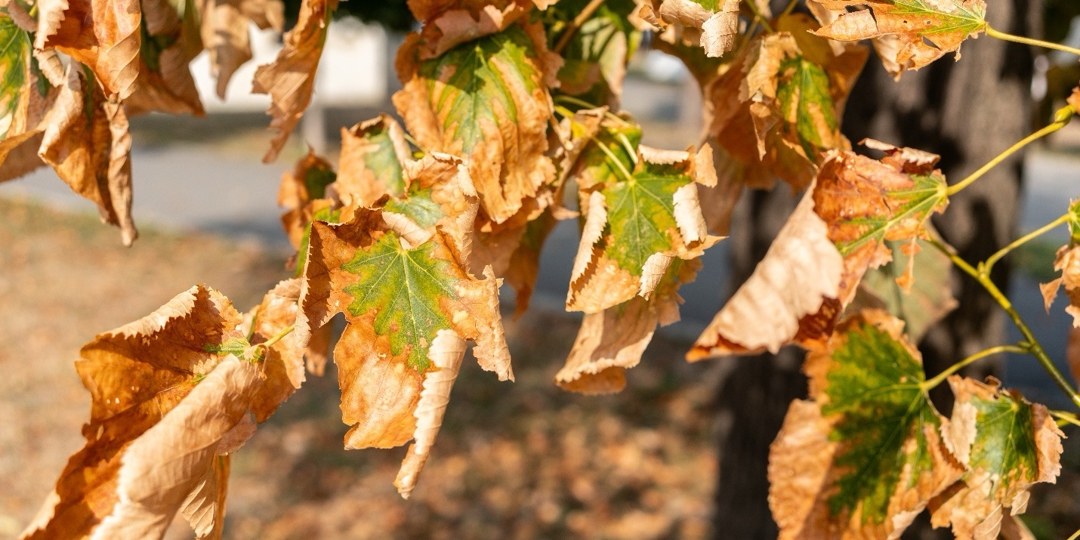
Record heat and drought are becoming increasingly prevalent throughout the United States and can be a serious danger to trees. As summer temperatures continue to climb and rainfall becomes increasingly unpredictable, many regions across the country are experiencing prolonged periods without significant rainfall. These extreme conditions put tremendous stress on trees, making it harder for them to absorb water as well as perform the vital physiological functions they need to survive.
Without proper care, trees can suffer from dehydration, weakened growth, permanent damage, and even death. This article will help you understand the risks posed by summer drought and offer practical solutions to keep your trees healthy throughout the hottest months of the year.
Tree Symptoms of Drought Stress – What to Look For
There are a number of outward symptoms that you can see which may indicate a tree is experiencing drought stress. They include:
- Wilting or drooping leaves: Trees suffering from drought often display leaves that lose their natural rigidity and begin to wilt, curl, or hang limply.
- Leaf scorch: Look for leaves with brown, dry edges or tips. This is a sign that the tree isn’t getting enough water to support healthy foliage.
- Premature fall color: Drought conditions can cause leaves to produce less chlorophyll, leading to early color change.
- Premature leaf drop: Drought-stressed trees may shed leaves earlier than usual, sometimes in midsummer, as a survival mechanism.
- Stunted growth: New shoots and leaves may be smaller than normal, indicating the tree is conserving resources due to limited water availability.
- Branch dieback: Dead branches can be a sign of drought stress and be at risk of breakage causing potential damage.
- Cracking or splitting bark: Some trees exhibit bark cracks or splits as a result of dehydration and internal stress.
- Increased vulnerability to pests and diseases: Drought weakens a tree’s natural defenses, making it more susceptible to insect infestations and disease infections.
Recognizing these symptoms early is critical in allowing you to take action before permanent harm occurs. The sooner you intervene, the better chance your tree has to recover and remain healthy throughout the dry, hot summer months.
Lasting Effects of Severe Drought on Trees
In addition to outward symptoms, severe drought can have lasting and potentially fatal effects on trees, causing systemic damage and failure that may persist long after soil moisture improves.
Fine root damage and death
While larger roots anchor trees and transport water upwards to the canopy, it’s the fine roots—sometimes thinner than a human hair—that are responsible for initially absorbing most of the water from the soil that surrounds them. In many cases, drought can dry out and kill these small, but critical fine feeder roots. Until they are fully restored, a tree will remain under stress and will be unable to absorb enough water to support a full canopy with normal growth and vigor.1
Carbon starvation
Trees rely on photosynthesis to produce the sugars and carbohydrates needed for growth, maintenance, and defense. During drought, a tree may stop transpiring to conserve moisture, which will slow photosynthesis dramatically. Leaves may be shed early or become so damaged that photosynthesis can no longer occur. As a result, the tree can’t generate enough energy to sustain itself - a condition known as carbon starvation.2
Hydraulic failure
A tree’s internal plumbing system, known as the xylem, transports water from its roots to its leaves. In severe drought, air bubbles (or embolisms) can form in the xylem, blocking water movement - a process called hydraulic failure. Once this happens, the tree can no longer deliver water to its leaves and tissues, causing sudden decline and, in some cases, irreversible damage which may kill a major branch or an entire tree.3
Ways You Can Protect Your Trees from Drought
Thankfully, there are a number of ways that you can protect your trees and landscape from the ravaging damages of severe heat and drought.
Watering can be instrumental in keeping your trees hydrated during prolonged dry spells. However, in areas where water restrictions are in place or trees are inaccessible to irrigation, adequate water may be unavailable for trees under drought stress.
Hardwood mulching can also help conserve moisture and protect tree roots from excessive heat – but without irrigation, under extended drought conditions, mulch can dry out and no longer shield a tree from moisture loss.
Fortunately, there is another solution - improving soil health - which is one of the most effective, but frequently overlooked, factors to consider when addressing extreme and prolonged drought conditions.
Soil is the environment that supports your tree’s roots and its overall health, storing the water that is so vital to its survival. And research has shown that soil health is one of the most important elements that influences overall tree resistance to drought and other stresses.4
Improving your soil’s health may have the most decisive impact on a tree’s overall well-being and its ability to withstand the pressures of extreme heat and prolonged drought periods.
Monster’s Soil Health Program Offers Comprehensive and Sustainable Drought Solutions
Monster’s Soil Health Program takes a comprehensive approach to improving soil, using science-backed treatments that are sustainable for the environment and proven to improve and save the lives of trees. This method can offer significant savings on water usage and ensures that your landscape not only survives, but thrives, during long periods of drought and other challenging conditions.
With lasting benefits, our Soil Health Program effectively addresses the root causes of tree stress, providing the direct support trees need to maintain vigor and resilience season after season.
Soil Injections Go to the Root for Maximum Benefit
Monster’s Soil Health Program uses deep root injections to deliver essential applications directly into the tree’s root zone. By targeting the roots where nutrients and supplementing materials are needed most, this approach ensures that trees receive maximum benefit from each treatment.
Biology Builds Healthy Soil Structure
This program restores biology and organic matter into the soil, which work together to improve its structure. This process creates pore spaces within the soil, allowing it to hold and store more water. Enhanced water retention helps trees better withstand periods of drought by ensuring roots have access to moisture where and when it’s needed most.
Hygroscopic Humectants Improve Moisture Availability
Hygroscopic humectants included in the Soil Health Program draw moisture from humidity in the air and make it directly available to tree roots. This unique feature ensures that trees can access water even when soil moisture levels are low, providing an additional layer of drought protection.5
Now is the Time to Protect Your Trees before Drought Damage Harms Your Trees and Landscape!
Drought conditions can cause lasting harm to your trees and landscape, making it essential to take proactive measures now. By acting before extensive damage occurs, you can help preserve the health and beauty of your trees and outdoor space.
Contact your local Monster Tree Service today and schedule Soil Health Program treatments to protect your trees and landscape. Early treatments will ensure that your trees are ready to withstand drought stress - and thrive - to stay green and healthy all year!