
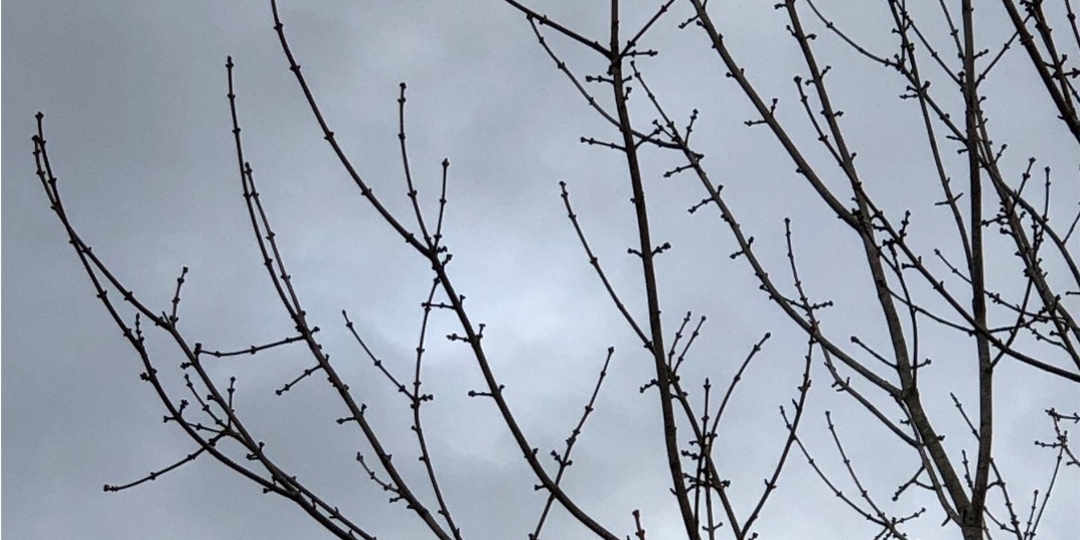
The leaves on a tree, with their distinctive shapes and colors, are one of the most salient features that accurately identify a tree’s species. And during the cold winter months, as our deciduous trees stand bare and leafless, correctly recognizing them can be a formidable challenge.
There are a number of reasons why learning to identify trees in winter is a good idea. One is that it’s a fun and rewarding activity that gets you outside in the winter to gain some fresh air - and insight - to deepen your connection with trees and the natural world. Winter tree identification can also be a helpful tool to accurately diagnose trees that may be prone to pest infestations or diseases discovered during the dormant season - and aid in making effective treatments.
As tricky and elusive as winter tree ID may seem, by piecing together a number of clues, you can solve the mysteries that cloak many of our trees throughout the winter season. In this article we’ll share some tips and information that can help you become an expert winter tree identification detective.
Start on the path to seeing trees in a new way
Without the aid of leaves, identifying trees in the winter may seem daunting, but it does get easier with time and experience. Before long you will get to know trees from a more intimate perspective, seeing them as old friends when you take a walk in the woods or stroll around your neighborhood.
It may be less overwhelming to begin with just a few common species in your area and gradually expand your knowledge. Over the course of the year, try observing the same trees as the seasons progress. Start with easier ID’s when leaves are present in spring and summer and then note how identifying features change throughout the year.
The more you practice over time, the more your winter tree knowledge will grow, giving you more confidence and making each outing more enjoyable and insightful. With that being said, let’s dive in and go through some of these features one by one, and start you on your winter tree ID journey!
Trees from a distance - notice shape and form
Especially when looking at a tree from a distance, its overall shape can help you home in on its identity. Elm trees (genus Ulmus) for instance have a canopy form that flares upwards and outward, somewhat resembling a martini glass. Mature oaks (genus Quercus) are well known for their ruggedly massive and majestically spreading limbs, while tulip poplars (Liriodendron tulipifera) can be identified by their tall and straight trunks that reach upwards toward the sky.
Look at branch structure
A tree's branches, stems and leaves are typically arranged in either an opposite or alternate pattern. Opposite branching, where pairs of branches grow directly across from each other, is most often found maple, ash, dogwood, and horse chestnut species – spelling a memorable acronym, “MAD Horse”.
In contrast, alternate branching, where branches stagger along the stem, is more common in other trees. In a few species a whorled pattern defines a tree’s branch and leaf arrangement. Noticing these patterns is a great starting point for narrowing down your options as you identify trees in winter.
Bark is a tree species’ unique fingerprint
Another key feature to examine is the texture, color, and pattern of a tree’s bark. Especially in winter, bark characteristics can be quite distinctive and serve as reliable identifiers. For instance, sycamores (Platanus occidentalis) have mottled, peeling bark that reveals striking patches of white, while birch trees (genus Betula) often display thin, papery bark that peels in horizontal strips.
Many oak species can be differentiated by their bark patterns. Red oaks (Quercus rubra) are characterized long vertical furrows in their bark patterns while white oaks (Quercus alba) have layered platy bark with a lighter gray color. Paying close attention to these differences can help you tell species apart even when trees are closely related or look very similar.
Follow your nose
In some cases, scent is a very helpful way to identify trees and differentiate trees that have similar visual features. For example, cherry birches (Betula lenta) look very much like some of our native cherry trees (genus Prunus). One way to tell these trees apart is to gently scratch a small twig and take a sniff. The cherry twig will smell like almond oil, and the birch will smell like root beer!
Take a closer look at the little things
Even though trees can grow to enormous sizes, sometimes it’s the little things that make all the difference for winter tree ID. Yet another useful clue is taking a closer look at the smaller details on twigs and branches and other structures that remain on the tree after last season’s leaf drop. Taking note of these small and subtle differences will greatly improve your accuracy in identifying trees during the winter months and help you further distinguish between similar looking trees in the winter landscape.
Some examples of trees with distinguishable branch features are:
- Staghorn sumac (Rhus typhina) is known for their velvety covered stems.
- Dogwood (genus Cornus) species can be spotted by their purple or red colored stems.
- The winged elm (Ulmus alata) is known for its flat corky projections that grow on opposite sides of its branches and twigs.
Tree buds can be one of your best friends in tree ID
Examining a tree’s buds is another especially helpful aid in winter identification. Tree buds are the small hardened and pointed protuberances found along a tree’s branches that in the spring become its new leaves and flowers. Buds vary widely in shape, size, color, and arrangement, distinctively varying among tree species, which makes them a great aid in identification.
Here are just a few examples.
- Beech trees (genus Fagus) have long, slender, sharply pointed buds that almost resemble thorns, running one by one along a branch of the tree.
- Oak (genus Quercus) buds are more rounded and oval in shape, and they are clustered closely together at the tips of twigs and tree branches.
- American dogwoods (Cornus florida) are well known in winter for their flower buds that have a round and flattened shape.
The scale coverings on buds, whether they are smooth and shiny or covered with tiny hairs, can also be a distinguishing feature. Sweetgum trees (Liquidambar styraciflua) have amber colored buds that almost appear wet and slick. While mockernut hickory trees (Carya tomentosa) - tomentosa literally means ”hairy” or “woolly”1 - have fuzzy buds that are bulbously round and shaped like Hershey’s kisses.
Leaf scars
Leaf scars are small marks left on tree stems after last year’s leaves have detached and fallen. Usually located directly below a bud, they show the point where a leaf’s stem was once connected to the tree. Every tree has a leaf scar that is a little different, so these are subtle but fine points to look at for winter tree ID.
Leaf scars come in many sizes and interesting forms, ranging from semicircular, U-shaped, circular, or oval. They can also be shield-shaped or crescent-shaped.2The black walnut tree (Juglans nigra) is known for a “monkey faced” leaf scar shaped like an animal face with dots (these are remnants of structures called vascular bundles) that appear as eyes and an arch of dots resembling a smiling mouth.
Bring along helpful tools
Like any job done well, having the right tools can be a big help. You may want to bring along a small magnifying glass or hand lens to get a closer look at a tree’s tiny features.
Guidebooks, keys, and online resources listing trees that are local to your region are also really useful for help and references. Some plant ID apps also recognize winter identification features. In addition, local state extension offices and botanical gardens and arboretums frequently offer winter tree identification classes.
Journal your journey
While you are out in the field, whether it be in the woods or your neighborhood, take time to make notes and photos of your observations. This can make it easier to make later comparisons or have useful images to consult in a field guide for more accurate identification. As you keep records over time, you'll start to recognize subtle differences that set each tree species apart - turning each winter walk into a learning adventure and a more meaningful experience - as you commune with our arboreal friends in the natural world.